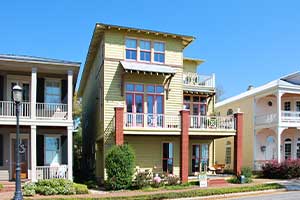
Shaker Heights, Ohio
Shaker Heights, OH Profile
Shaker Heights, OH, population 29,405 , is located
in Ohio's Cuyahoga county,
about 8.4 miles from Cleveland and 27.2 miles from Akron.
In the 90's the population of Shaker Heights has declined by about 5%.
It is Estimated in recent years the population of Shaker Heights has been declining at an annual rate of 1.0 percent.
Reports show that during 2003 property crime levels in the Shaker Heights area were lower than Ohio's average.
The same data shows violent crime levels to be lower than the Ohio average.
Shaker Heights Statistics
Shaker Heights Gender Information
Males in Shaker Heights: 13,389 (46%)
Females in Shaker Heights: 16,016 (54%)
As % of Population in Shaker Heights
Race Diversity in Shaker Heights
White: 60%
African American: 34%
Asian: 3%
Other/Mixed: 3%
As % of Population in Shaker Heights
Age Diversity in Shaker Heights
Median Age in Shaker Heights: 39.6 (Males in Shaker Heights: 38.0, Females in Shaker Heights: 40.9)
Shaker Heights Males Under 20: 14%
Shaker Heights Females Under 20: 14%
Shaker Heights Males 20 to 40: 10%
Shaker Heights Females 20 to 40: 12%
Shaker Heights Males 40 to 60: 13%
Shaker Heights Females 40 to 60: 16%
Shaker Heights Males Over 60: 8%
Shaker Heights Females Over 60: 12%
Economics in Shaker Heights
Shaker Heights Household Average Size: 2.39 people
Shaker Heights Median Household Income: $ 63,983
Shaker Heights Median Value of Homes: $ 181,500
Law Enforcement in Shaker Heights
Reported crimes in the Shaker Heights area during 2003:
Murder and non-negligent man-slaughter: 0
Forcible rape: 3
Robbery: 21
Aggravated assault: 4
Violent crime events per 100,000 people: 97
Burglary: 176
Larceny-theft: 460
Motor vehicle theft: 50
Arson: 5
Property crime events per 100,000 people: 2,374
Shaker Heights Location Information
Elevation: 1,000 feet above sea level.
Land Area: 6.3 Square Miles.
Nearby Towns & Cities to Shaker Heights
Beachwood 1.6 Miles
University Heights 1.7 Miles
Highland Hills 2.0 Miles
Warrensville Heights 2.7 Miles
North Randall 2.8 Miles
Woodmere 3.0 Miles
Cleveland Heights 3.3 Miles
Orange 3.4 Miles
South Euclid 3.5 Miles
Pepper Pike 3.8 Miles
Big Cities Nearest Shaker Heights
(Population 100,000+)
Cleveland 8.4 Miles
Akron 27.2 Miles
Erie 87.5 Miles
Detroit 97.7 Miles
Warren 103.4 Miles
Toledo 105.3 Miles
Pittsburgh 107.6 Miles
Sterling Heights 108.4 Miles
Livonia 112.1 Miles
Ann Arbor 125.5 Miles
|
Facts
Addiction: Compulsive and often uncontrollable craving, seeking, and use of a drug. The individual uses even when they know that using is not in their best interest. Addiction could be defined as chronically making the firm decision not to use, followed shortly by a Relapse due to experiencing overwhelming and compulsive urges to use despite the firm decision not to. Almost 8.6 million youths ages 12 to 17, over one third of this age group, used alcohol in the past year, more than 650,000 (2.6 percent) reported heavy alcohol use, and nine million engaged in at least one delinquent behavior in the past year. Effects of GHB begin 15-60 minutes after use and typically last up to 6 hours. It can be detected in the urine up to 12 hours after ingestion. Tolerance (progressive decreased susceptibility to a drug's effects), dependence (compulsion to take a drug to experience its psychic effects or to avoid the discomfort of its absence), and withdrawal reactions have been reported with GHB use. Respiratory depression can be severe enough to require life support on a ventilator or breathing machine until the drug effects wear off. The first time someone uses a drug of abuse, he or she experiences unnaturally intense feelings of pleasure. The limbic system is flooded with dopamine. Of course, drugs have other effects, too; a first-time smoker may also cough and feel nauseous from toxic chemicals in a tobacco or marijuana cigarette. |
Sobriety
Sobriety means the moderation in or abstinence from consumption of alcoholic liquor or use of drugs. When an individual with an addiction problem enters drug rehabilitation, their main goal is to attain long term sobriety. Unfortunately, sometimes drug addicts and alcoholics find they are able to sustain short periods of sobriety followed by a drug or alcohol relapse. This is why attending a drug or alcohol rehab will help the individual maintain their focus on sobriety. Often, it is only by getting help that individuals with severe drug addiction problems are able to achieve lasting sobriety.
Drug Rehabilitation
Drug rehabilitation is a place or program that an individual enters to treat a drug or alcohol addiction. Through therapy and education, the individual is restored to their former non-drug using self. They are then able to re-enter society clean and sober. There are many reasons why a person would need to attend a drug rehabilitation program. Some of the many reasons are: the inability to control their drinking or drug use, alienating their friends and family, problems with the law, and problems at work. Also, there are several different types of drug rehabilitation programs available: inpatient, outpatient, residential, short-term, and long-term.
Drug Overdose
A drug overdose occurs when you consume more drugs than your body can tolerate. Drug users are constantly flirting with the risk of a drug overdose. There is a
fine line between the high they're seeking and serious injury or death. While many victims of drug overdose recover without long term effects, there
can be serious consequences. Some drug overdoses cause the failure of major
organs like the kidneys or liver, or failure of whole systems like the
respiratory or circulatory systems. Patients who survive drug overdose may need
kidney dialysis, kidney or liver transplant, or ongoing care as a result of
heart failure, stroke, or coma. Death can occur in almost any drug overdose
situation, particularly if treatment is not started immediately.
Intervention
An intervention is when a group of loved ones and/or a trained intervention counselor meets with the person in need of help for the purpose of breaking down their denial and motivating them to immediately seek drug addiction treatment. Often, individuals in the midst of drug addiction engage in a variety of self destructive behaviors. Although baffling to friends and family members such people generally either aren't aware on a conscious level that they have a drug addiction problem, or even when they know they have a problem they may cling to the false belief that the problem will somehow go away without any outside help. When an intervention is held a moment of clarity is created
for the addict. Most people struggling with the problem of drug or alcohol
addiction will accept help the very day of the intervention.
Addiction
Addiction is one of the many consequences of so-called 'casual' drug and alcohol abuse. A loss of control over drugs and alcohol can be driven by physical or psychological factors, or sometimes both. Physical addiction takes place when the body comes to need a drug to function normally. If it is not taken, unpleasant withdrawal symptoms occur. The only way to avoid this is to take more of the drug. Psychological addiction takes place when an individual comes to rely on a drug to supply good feelings, such as relaxation, self-confidence, self esteem, and freedom from anxiety. This is not just a casual desire, it's a powerful compulsion.
|
|

To Find Drug Rehab and Treatment Centers in Shaker Heights
Call toll free


Shaker Heights Drug Rehab and
Alcohol Addiction Treatment Information
|