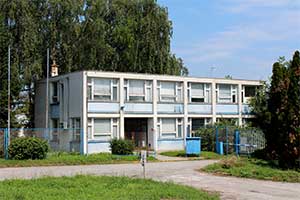
Weaver, Alabama
Weaver, AL Profile
Weaver, AL, population 2,619 , is located
in Alabama's Calhoun county,
about 59.3 miles from Birmingham and 80.9 miles from Huntsville.
In the 90's the population of Weaver has declined by about 4%.
It is Estimated in recent years the population of Weaver has been declining at an annual rate of less than one percent.
Reports show that during 2003 property crime levels in the Weaver area were higher than Alabama's average.
The same data shows violent crime levels to be higher than the Alabama average.
Weaver Statistics
Weaver Gender Information
Males in Weaver: 1,260 (48%)
Females in Weaver: 1,359 (52%)
As % of Population in Weaver
Race Diversity in Weaver
White: 87%
African American: 9%
Asian: 1%
Other/Mixed: 3%
As % of Population in Weaver
Age Diversity in Weaver
Median Age in Weaver: 36.9 (Males in Weaver: 35.3, Females in Weaver: 38.4)
Weaver Males Under 20: 15%
Weaver Females Under 20: 13%
Weaver Males 20 to 40: 12%
Weaver Females 20 to 40: 14%
Weaver Males 40 to 60: 14%
Weaver Females 40 to 60: 15%
Weaver Males Over 60: 7%
Weaver Females Over 60: 10%
Economics in Weaver
Weaver Household Average Size: 2.57 people
Weaver Median Household Income: $ 36,573
Weaver Median Value of Homes: $ 68,000
Law Enforcement in Weaver
Reported crimes in the Weaver area during 2003:
Murder and non-negligent man-slaughter: 0
Forcible rape: 4
Robbery: 5
Aggravated assault: 12
Violent crime events per 100,000 people: 818
Burglary: 47
Larceny-theft: 120
Motor vehicle theft: 19
Property crime events per 100,000 people: 7,246
Weaver Location Information
Elevation: 760 feet above sea level.
Land Area: 2.4 Square Miles.
Nearby Towns & Cities to Weaver
Saks 4.0 Miles
Alexandria 4.5 Miles
Blue Mountain 5.0 Miles
Jacksonville 5.1 Miles
Anniston 6.5 Miles
Hobson City 9.2 Miles
Oxford 9.6 Miles
Ohatchee 11.2 Miles
Bynum 12.9 Miles
Heflin 14.7 Miles
Big Cities Nearest Weaver
(Population 100,000+)
Birmingham 59.3 Miles
Huntsville 80.9 Miles
Atlanta 81.9 Miles
Chattanooga 93.9 Miles
Montgomery 99.9 Miles
Columbus 101.3 Miles
Athens 140.5 Miles
Nashville 175.8 Miles
Knoxville 186.7 Miles
Clarksville 211.1 Miles
|
Facts
Nearly one-half and one-third of 8th- and 10th-graders, respectively, fail to see "great risk" in smoking one or more packs of cigarettes per day. And smokeless tobacco is seen as even less hazardous; only about 39 percent of 8th-graders and 47 percent of 10th-graders see "great risk" in regular use of smokeless tobacco. Sentences for possession and sale of Schedule II controlled substances vary from state to state and can be harsh. First-time offenders are usually ordered into rehab programs, placed on probation, and given fines and random drug tests for up to a year after the court date. Dealers often face jail time and criminal records that can forever alter their ability to find good jobs, obtain college loans, and sometimes even hold a valid driver's license. The U.S. government is working closely with state and local law enforcement, and with the pharmaceutical companies, to curb the illegal use of oxycodone-containing medications. Their goal is to make these substances available only to those who really need them for their intended purposeāthe relief of pain. Deaths: It is estimated that 1,700 college students between the ages of 18 and 24 die each year from alcohol-related unintentional injuries, including motor vehicle crashes (about half among students under 21) Cocaine addiction reached peak levels in the 1980s, and continues to be a major problem in many societies. Curiously, before the 1980s, cocaine was considered to be a safe, non-addicting stimulant drug. There appeared to be no overt physical symptoms that would constitute a withdrawal syndrome. The spread of crack cocaine in the 1980s changed this perception. Crack (solid, free-base cocaine) was much cheaper than powdered cocaine and became widely available, particularly to the poor. The smoking of the drug leads to a rapid, short-lasting but profound euphoria that is extremely addictive. It rapidly became clear that the criteria for SUBSTANCE DEPENDENCE were easily met with cocaine. Compulsive use, loss of control, and a withdrawal syndrome began to be clearly recognized. Cocaine WITHDRAWAL is characterized by several phases. A triphasic abstinence pattern generally follows a cocaine binge. The first phase is termed the crash, which lasts from hours to days. The crash is characterized by a sharp decrease in mood and energy, agitation, anxiety, depression and craving for cocaine. There is an extreme need for sleep, which is usually met by the ingestion of sedatives, alcohol or opiates. The next phase, withdrawal, can last for many weeks and is characterized primarily by an intense dysphoric syndrome. Depression and ANHEDONIA (inability to experience pleasure) contrast with memories of stimulant-induced euphoria and often lead to a repetition of the bingeing cycle. If the user continues to be abstinent, the third phase emerges, extinction. During this phase, normal mood and energy are restored. However, the user may experience occasional cravings for cocaine for months or even years after the last binge. The cravings are usually invoked by stimuli or memories associated with the cocaine experience. |
Addict
An addict is an individual who has a compulsive urge to use drugs, to the point where they feel they have no effective choice but to continue use. An addict will continue their self destructive behaviors in order to feel good or to avoid
feeling bad. It can dominate their mind, and keep them coming back for more. The addiction can be
different for each addict, depending on their vice and the kind of person they
are.
Drug Overdose
A drug overdose occurs when you consume more drugs than your body can tolerate. Drug users are constantly flirting with the risk of a drug overdose. There is a
fine line between the high they're seeking and serious injury or death. While many victims of drug overdose recover without long term effects, there
can be serious consequences. Some drug overdoses cause the failure of major
organs like the kidneys or liver, or failure of whole systems like the
respiratory or circulatory systems. Patients who survive drug overdose may need
kidney dialysis, kidney or liver transplant, or ongoing care as a result of
heart failure, stroke, or coma. Death can occur in almost any drug overdose
situation, particularly if treatment is not started immediately.
Withdrawal
Withdrawal is what happens when a person who is addicted to drugs or alcohol discontinues use. There are numerous symptoms that take place both physically and emotionally when an addicted individual stops using. Withdrawal can last a few days to a few weeks and may include nausea or vomiting, sweating, shakiness, and anxiety. Keep in mind; this only occurs if a person has regular, heavy use of a drug or alcohol. Withdrawal can be extremely uncomfortable without professional help. Treatment for withdrawal from alcohol or drugs may require a medical professional to be present. Drug and alcohol rehabilitation is often the best way to overcome withdrawal and its symptoms as well as recovery from drug addiction.
Sobriety
Sobriety means the moderation in or abstinence from consumption of alcoholic liquor or use of drugs. When an individual with an addiction problem enters drug rehabilitation, their main goal is to attain long term sobriety. Unfortunately, sometimes drug addicts and alcoholics find they are able to sustain short periods of sobriety followed by a drug or alcohol relapse. This is why attending a drug or alcohol rehab will help the individual maintain their focus on sobriety. Often, it is only by getting help that individuals with severe drug addiction problems are able to achieve lasting sobriety.
Dependence
Dependence is the compulsive use of a substance despite negative consequences which can be severe; drug dependence is simply excessive use of a drug or use of a drug for purposes for which it was not medically intended. Physical dependence on a substance (needing a drug to function) is not necessary or sufficient to define addiction. There are some substances that don't cause addiction but do cause physical dependence (for example, some blood pressure medications) and substances that cause addiction but not classic physical dependence (cocaine withdrawal, for example, it does not have symptoms like vomiting and chills; it is mainly characterized by depression).
|
|

To Find Drug Rehab and Treatment Centers in Weaver
Call toll free


Weaver Drug Rehab and
Alcohol Addiction Treatment Information
|