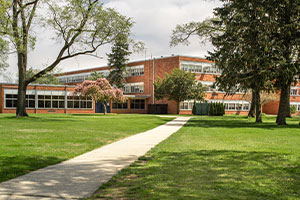


Oakboro, North Carolina
Oakboro, NC Profile
Oakboro, NC, population 1,198 , is located
in North Carolina's Stanly county,
about 29.1 miles from Charlotte and 60.7 miles from Winston-Salem.
In the 90's the population of Oakboro has grown by about 100%.
It is Estimated in recent years the population of Oakboro has been declining at an annual rate of less than one percent.
Reports show that during 2003 property crime levels in the Oakboro area were higher than North Carolina's average.
The same data shows violent crime levels to be lower than the North Carolina average.
Oakboro Statistics
Oakboro Gender Information
Males in Oakboro: 571 (48%)
Females in Oakboro: 627 (52%)
As % of Population in Oakboro
Race Diversity in Oakboro
White: 76%
African American: 20%
Native American: 1%
Other/Mixed: 3%
As % of Population in Oakboro
Age Diversity in Oakboro
Median Age in Oakboro: 37.7 (Males in Oakboro: 35.5, Females in Oakboro: 40.2)
Oakboro Males Under 20: 12%
Oakboro Females Under 20: 13%
Oakboro Males 20 to 40: 15%
Oakboro Females 20 to 40: 13%
Oakboro Males 40 to 60: 12%
Oakboro Females 40 to 60: 14%
Oakboro Males Over 60: 8%
Oakboro Females Over 60: 12%
Economics in Oakboro
Oakboro Household Average Size: 2.46 people
Oakboro Median Household Income: $ 41,369
Oakboro Median Value of Homes: $ 82,900
Law Enforcement in Oakboro
Reported crimes in the Oakboro area during 2003:
Murder and non-negligent man-slaughter: 0
Forcible rape: 0
Robbery: 3
Aggravated assault: 0
Violent crime events per 100,000 people: 248
Burglary: 21
Larceny-theft: 27
Motor vehicle theft: 0
Arson: 0
Property crime events per 100,000 people: 3,974
Oakboro Location Information
Elevation: 540 feet above sea level.
Land Area: 0.6 Square Miles.
Nearby Towns & Cities to Oakboro
Stanfield 5.6 Miles
Locust 5.9 Miles
Albemarle 11.3 Miles
Norwood 11.9 Miles
Mt Pleasant 13.4 Miles
Unionville 14.0 Miles
Ansonville 15.0 Miles
New London 16.3 Miles
Peachland 16.5 Miles
Marshville 16.5 Miles
Big Cities Nearest Oakboro
(Population 100,000+)
Charlotte 29.1 Miles
Winston-Salem 60.7 Miles
Greensboro 65.9 Miles
Fayetteville 82.9 Miles
Columbia 93.8 Miles
Durham 96.4 Miles
Raleigh 102.4 Miles
Augusta 153.5 Miles
Athens 194.4 Miles
Knoxville 208.3 Miles
|
Facts
An Arizona Department of Public Safety report found that fatal accidents increased over 25% while traffic fatalities increased more than 35% after the state MLPA was lowered from 21 to 19. Adolescent drug abuse is a complex interaction of multiple factors such as family structure and relationships, school success, peers, community, genetics, and psychological well-being. For PSCs and other school personnel to support and intervene in student substance abuse, they must have a knowledge base relating to its warning signs. It is important to note that some cues may be strong indictors of substance abuse; however, the presence of one symptom does not necessarily indicate that a student is abusing substances. Therefore, if PSCs observe potential symptoms of substance abuse, they should communicate their perceptions to the student and receive clarification concerning their interpretations before proceeding. For example, a PSC may observe that a student is exhibiting a pattern of inconsistent academic performance, absenteeism, and moodiness. If these behaviors are atypical for the student, the PSC may be warranted in approaching the student about his or her observations. First, the PSC may simply identify his or her perceptions concerning the changes in behavior. Next, the PSC may ask an open-ended question eliciting the student to discuss his or her current life situation (i.e., How are things going for you?). Nevertheless, having a knowledge base of the symptomology of substance abuse is necessary in supporting adolescents who may be abusing substances. The literature identifies numerous factors that may be related to adolescent substance abuse. These behavioral cues are not specific to adolescent heroin abuse; but rather to adolescent substance abuse in general. Additionally, these potential indicators may be signs of other kinds of difficulties. Nevertheless, having an understanding of substance abuse symptomology is paramount in intervening as early as possible for the student's benefit. The warning signs of adolescent substance abuse presented are organized by family characteristics, psychological cues, and educational indicators. These observable potential indicators are intended to provide introductory information for PSCs, enabling them to intervene appropriately in cases of suspected substance abuse. PSCs and other school personnel may begin to identify student substance abuse that might otherwise go unseen by observing, listening, and interacting with their students. It is common for students who are abusing substances to deny their use and be "resistant"; therefore, PSCs need to utilize therapeutic approaches that appropriately address adolescent resistance. Repeated use of stimulants can lead to feelings of hostility or paranoia in some users. Single high doses can produce dangerously high body temperatures and an irregular heartbeat. The percentage of alcoholics admitted for treatment who also concurrently use benzodiazepines ranges between 12 to 23 percent. High rates of benzodiazepine abuse have been found in alcoholics who have experienced failure in treatment programs for alcohol abuse. Clinical experience suggests that benzodiazepine abuse occurs with the greatest frequency in alcoholics with severe dependence and in alcoholics who abuse multiple types of drugs. |
Withdrawal
Withdrawal is what happens when a person who is addicted to drugs or alcohol discontinues use. There are numerous symptoms that take place both physically and emotionally when an addicted individual stops using. Withdrawal can last a few days to a few weeks and may include nausea or vomiting, sweating, shakiness, and anxiety. Keep in mind; this only occurs if a person has regular, heavy use of a drug or alcohol. Withdrawal can be extremely uncomfortable without professional help. Treatment for withdrawal from alcohol or drugs may require a medical professional to be present. Drug and alcohol rehabilitation is often the best way to overcome withdrawal and its symptoms as well as recovery from drug addiction.
Sobriety
Sobriety means the moderation in or abstinence from consumption of alcoholic liquor or use of drugs. When an individual with an addiction problem enters drug rehabilitation, their main goal is to attain long term sobriety. Unfortunately, sometimes drug addicts and alcoholics find they are able to sustain short periods of sobriety followed by a drug or alcohol relapse. This is why attending a drug or alcohol rehab will help the individual maintain their focus on sobriety. Often, it is only by getting help that individuals with severe drug addiction problems are able to achieve lasting sobriety.
Dependence
Dependence is the compulsive use of a substance despite negative consequences which can be severe; drug dependence is simply excessive use of a drug or use of a drug for purposes for which it was not medically intended. Physical dependence on a substance (needing a drug to function) is not necessary or sufficient to define addiction. There are some substances that don't cause addiction but do cause physical dependence (for example, some blood pressure medications) and substances that cause addiction but not classic physical dependence (cocaine withdrawal, for example, it does not have symptoms like vomiting and chills; it is mainly characterized by depression).
Drug Abuse
Drug abuse is defined as the chronic or habitual use of any chemical substance to alter states of body or mind for other than medically warranted purposes. Drug abuse is a problem which has an effect on people of all income levels,
ages, and stations in life. Quite often the last person to see that there is a
problem is the drug abuser them self. Every year, more and more people become
drug addicts in their pursuit to get "high".
Alcoholism
Alcoholism, also known as "alcohol dependence," is a condition that includes craving and continued alcohol abuse despite repeated drinking-related problems, such as losing a job or getting into trouble with the law. It includes four major areas: Craving: - A strong need, or compulsion, to drink. Impaired control: -The inability to limit one's drinking on any given occasion. Physical dependence: -Withdrawal symptoms, such as nausea, sweating, shakiness, and anxiety, when alcohol use is stopped after a period of heavy drinking. Tolerance: - The need for increasing amounts of alcohol in order to feel its effects.
|
|

To Find Drug Rehab and Treatment Centers in Oakboro
Call toll free


Oakboro Drug Rehab and
Alcohol Addiction Treatment Information
|