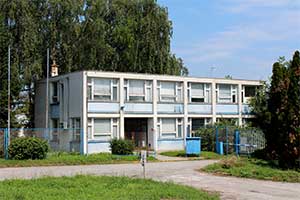
Inver Grove Heights, Minnesota
Inver Grove Heights, MN Profile
Inver Grove Heights, MN, population 29,751 , is located
in Minnesota's Dakota county,
about 7.1 miles from St Paul and 14.2 miles from Minneapolis.
In the 90's the population of Inver Grove Heights has grown by about 32%.
It is Estimated in recent years the population of Inver Grove Heights has been growing at an annual rate of 1.6 percent.
Reports show that during 2003 property crime levels in the Inver Grove Heights area were lower than Minnesota's average.
The same data shows violent crime levels to be lower than the Minnesota average.
Inver Grove Heights Statistics
Inver Grove Heights Gender Information
Males in Inver Grove Heights: 14,737 (50%)
Females in Inver Grove Heights: 15,014 (50%)
As % of Population in Inver Grove Heights
Race Diversity in Inver Grove Heights
White: 92%
African American: 2%
Asian: 2%
Other/Mixed: 4%
As % of Population in Inver Grove Heights
Age Diversity in Inver Grove Heights
Median Age in Inver Grove Heights: 33.8 (Males in Inver Grove Heights: 32.7, Females in Inver Grove Heights: 34.8)
Inver Grove Heights Males Under 20: 15%
Inver Grove Heights Females Under 20: 14%
Inver Grove Heights Males 20 to 40: 15%
Inver Grove Heights Females 20 to 40: 16%
Inver Grove Heights Males 40 to 60: 14%
Inver Grove Heights Females 40 to 60: 14%
Inver Grove Heights Males Over 60: 5%
Inver Grove Heights Females Over 60: 6%
Economics in Inver Grove Heights
Inver Grove Heights Household Average Size: 2.62 people
Inver Grove Heights Median Household Income: $ 59,090
Inver Grove Heights Median Value of Homes: $ 137,800
Law Enforcement in Inver Grove Heights
Reported crimes in the Inver Grove Heights area during 2003:
Murder and non-negligent man-slaughter: 1
Forcible rape: 12
Robbery: 8
Aggravated assault: 32
Violent crime events per 100,000 people: 171
Burglary: 137
Larceny-theft: 777
Motor vehicle theft: 80
Arson: 30
Property crime events per 100,000 people: 3,208
Inver Grove Heights Location Information
Land Area: 28.7 Square Miles.
Water Area: 1.5 Square Miles.
Nearby Towns & Cities to Inver Grove Heights
Newport 2.4 Miles
St Paul Park 2.6 Miles
South St Paul 3.1 Miles
Sunfish Lake 3.2 Miles
Cottage Grove 5.0 Miles
Mendota Heights 5.3 Miles
West St Paul 5.5 Miles
Lilydale 6.2 Miles
Mendota 6.6 Miles
Woodbury 6.6 Miles
Big Cities Nearest Inver Grove Heights
(Population 100,000+)
St Paul 7.1 Miles
Minneapolis 14.2 Miles
Sioux Falls 202.3 Miles
Cedar Rapids 208.6 Miles
Madison 218.9 Miles
Des Moines 226.4 Miles
Green Bay 248.0 Miles
Rockford 266.3 Miles
Milwaukee 284.7 Miles
Omaha 288.1 Miles
|
Facts
In the decades since research began, doctors have come to recognize that of the body's many systems, the cardiovascular system experiences the most noticeable short-term effects of cocaine use. The first of these is a rapid increase in the user's heart rate, which results in the heart pumping a greater volume of blood through the body. This is essentially the same effect that results from strenuous physical activity except that when cocaine is the cause, blood vessels narrow, forcing the heart to work not just faster but harder. Occasionally, cocaine also causes temporary rapid or erratic heart rhythms, increased blood pressure, and increased body temperature. The central nervous system also experiences temporary physiological changes. As the cocaine carried by the bloodstream enters the brain, the electrical activity of the brain is temporarily altered as the cocaine is absorbed by cells called neurons. The absorption of cocaine alters the chemistry of the brain to increase production of the chemical dopamine. This change in brain chemistry is responsible for the sense of euphoria, sometimes referred to as a "rush" that is usually described in pleasurable terms as a sudden sense of excitement. In most healthy people, most of these symptoms disappear within thirty to sixty minutes as the liver chemically decomposes the cocaine, which is then removed from the system by the kidneys. In recent years teen substance use rates (except for the use of inhalants and prescription opiates) have been dropping overall, but substance use still remains a leading cause of injury and death in young people, as well as causing long-term social and health problems. Annual studies such as the Monitoring the Future Survey track trends in teen drug, alcohol, and tobacco use and attitudes across the United States. The coping mechanisms typically used by codependents are denial (I deny, change, or minimize how I truly feel), low self-esteem (I value others' approval of my feelings, actions, and thinking over my own), compliance (I am afraid to express my own opinions and feelings, especially if they are different), and control (I become resentful when others refuse my help). Family Relationships: Family relationships refers to the dynamics among individuals, such as the quality of a marriage and how well parents and children or siblings get along. Every family has its own way of offering support to each other—giving acceptance, encouragement, security, and love—and also of controlling each other through establishing rules and practicing discipline. Concerned, involved parents can help prevent delinquent behaviors in children and adolescents. Supportive parents provide encouragement and praise, are physically affectionate, and enjoy the companionship of their children. Evidence shows that a rewarding parent-child relationship can help prevent substance abuse during childhood and adolescence. Families in which parents praise and encourage their children, offering closeness, trust, and help with personal problems, are typically families of abstainers, or people who do not use drugs. Children who feel rejected by their parents or overly controlled by them, and whose family life is marked by a great deal of conflict, are more likely to try drugs at an early age and to continue using them. The subject of control is more complex than the subject of support. It is important to distinguish between authoritative and authoritarian controls. Authoritative control combines warmth, supervision, and the opportunity for children to voice their own feelings. Children accustomed to this type of control are more likely to abstain from using drugs or to experiment only rarely with "soft" drugs. Authoritarian control, on the other hand, is based on force, threats, and physical punishment. This type of control is more typical of the families of dependent drug users, and resembles bullying more than parenting. In such families, sexual abuse and physical abuse are also more likely to occur. Conclusive evidence shows that families with inconsistent or no clearly defined rules also have adolescents who abuse drugs. The constantly changing rules in some families threaten the parents' ability to monitor and supervise children. The children do not know what their parents expect, creating confusion. These families have not developed clear expectations for good behavior, nor clear limits regarding misbehavior. Another important element of family dynamics is the way family members communicate with each other. Communication is the essential feature of all family relations, from expressions of support to the enforcement of the rules. Good communication involves understanding the other person's point of view. In a family where drug use is prevalent, family members often misunderstand each other to the point that communicating becomes a negative experience. |
Drug Addiction
Drug addiction is a pattern of repeated drug taking that usually results in tolerance (the need for greater amounts of the drug to achieve the same effect), withdrawal (physical and cognitive effects when drug use declines or stops), and compulsive drug taking behavior (drug taking that persists despite efforts to reduce intake and despite problems with family, friends, and work). Drug addiction encompasses a diverse range of drugs (such as alcohol, cannabis, amphetamines, and cocaine) and is caused by many different factors.
Tolerance
Tolerance to a drug takes place when an individual is exposed to the same drug repeatedly and begins to build up an resistance to the drugs effects. The body then adapts and develops a tolerance for the drug. The addiction that is produced is so powerful that it creates cravings in the user. These cravings for the drug are the result of its impact on the individual's memory with feelings of pleasantness and euphoria which the individual has come to associate with the taking of the drug.
Therapeutic Community
An effective therapeutic community attends to the many needs of the individual, not just his or her drug use. Care given at a therapeutic community addresses the individual's drug use and associated medical, psychological, social, vocational, and legal problems. Also, a therapeutic community will continue to be flexible and provide ongoing assessments of the individual's needs, which may change during the course of care.
Remaining in care at a therapeutic community for an adequate period of time is critical for treatment effectiveness. The time depends on an individual's needs. For most people, the significant improvement is reached at about 3 months in treatment.
Addict
An addict is an individual who has a compulsive urge to use drugs, to the point where they feel they have no effective choice but to continue use. An addict will continue their self destructive behaviors in order to feel good or to avoid
feeling bad. It can dominate their mind, and keep them coming back for more. The addiction can be
different for each addict, depending on their vice and the kind of person they
are.
Alcoholism
Alcoholism, also known as "alcohol dependence," is a condition that includes craving and continued alcohol abuse despite repeated drinking-related problems, such as losing a job or getting into trouble with the law. It includes four major areas: Craving: - A strong need, or compulsion, to drink. Impaired control: -The inability to limit one's drinking on any given occasion. Physical dependence: -Withdrawal symptoms, such as nausea, sweating, shakiness, and anxiety, when alcohol use is stopped after a period of heavy drinking. Tolerance: - The need for increasing amounts of alcohol in order to feel its effects.
|
|

To Find Drug Rehab and Treatment Centers in Inver Grove Heights
Call toll free


Inver Grove Heights Drug Rehab and
Alcohol Addiction Treatment Information
|