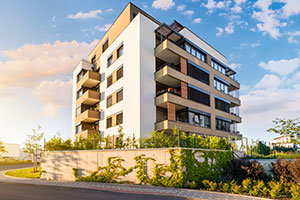
Santa Paula, California
Santa Paula, CA Profile
Santa Paula, CA, population 28,598 , is located
in California's Ventura county,
about 12.8 miles from Oxnard and 14.4 miles from Ventura.
In the 90's the population of Santa Paula has grown by about 14%.
It is Estimated in recent years the population of Santa Paula has been growing at an annual rate of less than one percent.
Reports show that during 2003 property crime levels in the Santa Paula area were lower than California's average.
The same data shows violent crime levels to be lower than the California average.
Santa Paula Statistics
Santa Paula Gender Information
Males in Santa Paula: 14,562 (51%)
Females in Santa Paula: 14,036 (49%)
As % of Population in Santa Paula
Race Diversity in Santa Paula
White: 55%
Native American: 1%
Asian: 1%
Other/Mixed: 43%
As % of Population in Santa Paula
Age Diversity in Santa Paula
Median Age in Santa Paula: 29.6 (Males in Santa Paula: 28.6, Females in Santa Paula: 30.8)
Santa Paula Males Under 20: 18%
Santa Paula Females Under 20: 17%
Santa Paula Males 20 to 40: 17%
Santa Paula Females 20 to 40: 14%
Santa Paula Males 40 to 60: 10%
Santa Paula Females 40 to 60: 10%
Santa Paula Males Over 60: 6%
Santa Paula Females Over 60: 8%
Economics in Santa Paula
Santa Paula Household Average Size: 3.49 people
Santa Paula Median Household Income: $ 41,651
Santa Paula Median Value of Homes: $ 166,600
Law Enforcement in Santa Paula
Reported crimes in the Santa Paula area during 2003:
Murder and non-negligent man-slaughter: 2
Forcible rape: 4
Robbery: 28
Aggravated assault: 48
Violent crime events per 100,000 people: 281
Burglary: 112
Larceny-theft: 345
Motor vehicle theft: 58
Arson: 7
Property crime events per 100,000 people: 1,767
Santa Paula Location Information
Elevation: 274 feet above sea level.
Land Area: 4.6 Square Miles.
Nearby Towns & Cities to Santa Paula
Fillmore 8.6 Miles
Camarillo 9.6 Miles
El Rio 10.6 Miles
Moorpark 11.2 Miles
Ojai 12.3 Miles
Oxnard 12.8 Miles
Casa Conejo 13.5 Miles
Mira Monte 14.0 Miles
Meiners Oaks 14.1 Miles
Oak View 14.1 Miles
Big Cities Nearest Santa Paula
(Population 100,000+)
Oxnard 12.8 Miles
Ventura 14.4 Miles
Simi Valley 16.9 Miles
Thousand Oaks 17.9 Miles
Santa Clarita 29.6 Miles
Burbank 44.5 Miles
Glendale 48.3 Miles
Inglewood 48.7 Miles
Los Angeles 51.1 Miles
Pasadena 54.2 Miles
|
Facts
Tolerance is one of such undesirable events. It usually develops if a drug is used for a long time. When the body gets used to it, medication loses its effectiveness and the larger dose is necessary to suppress the symptoms of anxiety, which returns to the patient as soon as the body stops responding to the drug properly. In fact, scientists confirm that the long-term use of benzodiazepines leads to increased anxiety. One more reason for the short-term therapy is the risk to develop dependence. Even the use of benzodiazepines at prescribed levels will lead to a dependence to the drug. The most vivid sign of physical dependence is the experiencing of withdrawal symptoms after the drug discontinuation, which include insomnia, nightmares, hypertension, tachycardia, anxiety, perceptual disturbances, distortion of all the senses, dysphoria, and, in rare cases, psychosis and epileptic seizures. Since all these symptoms are dangerous, the dose of the drug is lowered over a long period of time to avoid withdrawal. Recently, several teens have died after inhaling the chemical difluoroethane from a popular computer cleaning spray known as Dust-Off. Falcon, the manufacturer of Dust-Off, labels cans of Dust-Off with conspicuous warnings about misuse of the product. The product Dust-Off itself is not the source of the problem; it is only one example of hundreds of common household products with the potential to be abused by inhalant abusers. The illegal use of OxyContin, as well as other prescription drugs, has increased recently the 1999 NHSDA showed that approximately 9% of the U.S. population (19.9 million people) have used pain relievers illegally in their lifetime. An estimated 1.6 million Americans have used prescription type pain relievers non-medically for the first time in 1998. This represents a significant increase since the 1980's. When you visit your health care provider, he or she will ask you a number of questions about your alcohol use to determine whether you are having problems related to your drinking. Try to answer these questions as fully and honestly as you can. You also will be given a physical examination. If your health care provider concludes that you may be dependent on alcohol, he or she may recommend that you see a specialist in treating alcoholism. You should be involved in any referral decisions and have all treatment choices explained to you. |
Therapeutic Community
An effective therapeutic community attends to the many needs of the individual, not just his or her drug use. Care given at a therapeutic community addresses the individual's drug use and associated medical, psychological, social, vocational, and legal problems. Also, a therapeutic community will continue to be flexible and provide ongoing assessments of the individual's needs, which may change during the course of care.
Remaining in care at a therapeutic community for an adequate period of time is critical for treatment effectiveness. The time depends on an individual's needs. For most people, the significant improvement is reached at about 3 months in treatment.
Dependence
Dependence is the compulsive use of a substance despite negative consequences which can be severe; drug dependence is simply excessive use of a drug or use of a drug for purposes for which it was not medically intended. Physical dependence on a substance (needing a drug to function) is not necessary or sufficient to define addiction. There are some substances that don't cause addiction but do cause physical dependence (for example, some blood pressure medications) and substances that cause addiction but not classic physical dependence (cocaine withdrawal, for example, it does not have symptoms like vomiting and chills; it is mainly characterized by depression).
Residential Treatment
Residential treatment offers intensive drug addiction help over a period of weeks or months. This form of treatment has some advantages over out-patient treatment, although it may not be suitable for everyone. For example, those who are responsible for caring for young children may be better suited to attendance at an out patient treatment program. Residential treatment offers a safe, drug and alcohol-free environment where individuals can confront their own drug addiction and associated issues, with the help of qualified staff. Therapy usually consists of a mixture of group counseling, individual counseling and an introduction to the principles of a drug recovery program.
Sobriety
Sobriety means the moderation in or abstinence from consumption of alcoholic liquor or use of drugs. When an individual with an addiction problem enters drug rehabilitation, their main goal is to attain long term sobriety. Unfortunately, sometimes drug addicts and alcoholics find they are able to sustain short periods of sobriety followed by a drug or alcohol relapse. This is why attending a drug or alcohol rehab will help the individual maintain their focus on sobriety. Often, it is only by getting help that individuals with severe drug addiction problems are able to achieve lasting sobriety.
Abstinence
Abstinence is the act or practice of refraining from indulging a desire. The type of abstinence we are referring to here is abstinence from drugs and alcohol. This term has two connotations when it comes to abstaining from drugs. The first refers to drug or alcohol treatment programs that aim to help an individual stop using drugs or alcohol for the rest of their lives. The time abstinence is also used in drug education and prevention. It refers to trying to stop children from ever using drugs.
|
|

To Find Drug Rehab and Treatment Centers in Santa Paula
Call toll free


Santa Paula Drug Rehab and
Alcohol Addiction Treatment Information
|